
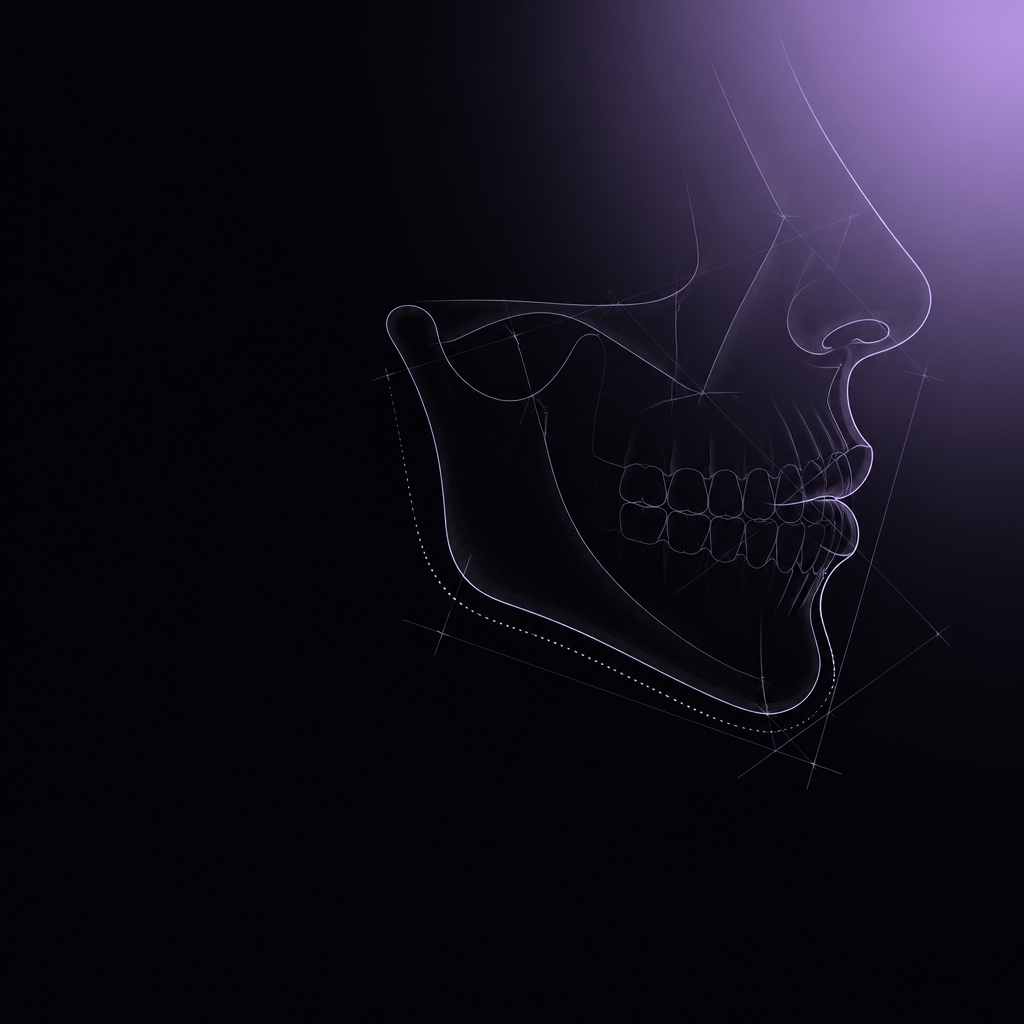
Mewing has one of the simplest pitches in the entire looksmaxxing world: rest your tongue against the roof of your mouth, hold it there, and your jawline reshapes itself over months. No surgery, no gym, no product. Just posture. It's also one of the most-searched terms in this space, with millions of "before and after" videos built entirely around that promise.
The evidence behind it is much thinner than the popularity suggests.
What the research actually shows
The core claim — that sustained tongue posture reshapes adult facial bone — has essentially no support from controlled clinical research. The American Association of Orthodontists has stated directly that there's no scientific evidence mewing reshapes the jaw, and doesn't treat it as a substitute for orthodontic care. A recent review of the literature described what exists as a "paucity" of evidence, with claims resting on anecdotal reports and low-quality studies rather than randomized trials.
That's not the same as "mewing does literally nothing." Proper tongue posture is a real, established concept in orthodontic and myofunctional therapy — it's just not shown to redraw bone structure in an adult. The plausible, better-supported benefits are smaller and different: easier nasal breathing, lower bruxism (teeth grinding) risk, and modest improvement in soft-tissue tone around the mouth. Useful things. Not a new jawline.
There's a real, separate literature on orthotropics in growing children, where jaw and palate development is still active and oral posture can genuinely influence how a face develops. Almost none of that transfers to a 25-year-old whose facial skeleton finished growing years ago — but "there's real science in kids" and "it reshapes my jaw as an adult" get flattened into the same claim online constantly, which is a big part of why the myth persists.
Why the before/after photos look so convincing anyway
This is the part that actually explains mewing's viral spread, and it has almost nothing to do with the tongue.
Head position changes jaw appearance instantly. Tilting your chin down and back — exactly the posture mewing tutorials tell you to hold — makes the jaw look more defined in a photo within seconds, with zero tissue change involved. Camera angle and lens distance do the same thing: a phone held slightly above eye level, farther from the face, minimizes jaw width in a way a close, low-angle shot never will. Add typical transformation-video factors — different lighting, often several months of separate body fat loss, sometimes just better posture overall — and you get a genuinely different-looking jaw with a story that credits the tongue for all of it.
None of that means the photos are faked. It means the mechanism being credited usually isn't the one doing the work.
What this means if you actually want a sharper jawline
If the goal is how your jawline reads in photos specifically, the reliable levers are the same unglamorous ones mewing videos accidentally demonstrate: consistent head position, a slightly higher camera angle, better lighting, and lower facial fat percentage where that's the actual limiting factor. If the goal is bone structure itself, that's a conversation for an orthodontist or maxillofacial surgeon, not a tongue-posture routine — and it's worth knowing which one you're actually chasing before you spend six months on a habit that's mostly free but isn't doing what the videos claim.
Jawline definition is one of the categories we break down in every scan — not as a single "good or bad" verdict, but scored against what's actually measurable in your photo, the same distinction that matters here. Knowing whether a low score is about bone, fat, posture, or just how the photo was taken is the difference between a plan that works and six months of holding your tongue a certain way for nothing.